

Animal rescue across Gujarat
Found an injured or trapped animal?
Our helpline answers rescue calls day and night, in Ahmedabad and across Gujarat. Tell us where the animal is and what you can see, and stay nearby if it is safe to do so.

15,000+ Animals, birds and reptiles rescued
First response
Before a rescuer reaches you
The first few minutes decide how well an animal recovers. Three things help almost every time.
-
Keep it contained and quiet
If you can do it safely, move the animal into a ventilated cardboard box lined with a soft cloth. Darkness and quiet do more against shock than anything else available to you.
-
Do not offer food or water
An injured or concussed animal cannot swallow properly, and liquid ends up in the lungs rather than the stomach. Wait for someone trained to assess it.
-
Call the helpline and stay with the animal
Give the exact location, what the animal is, and what you can see of its condition. Keep pets, traffic and onlookers away until a rescuer arrives.
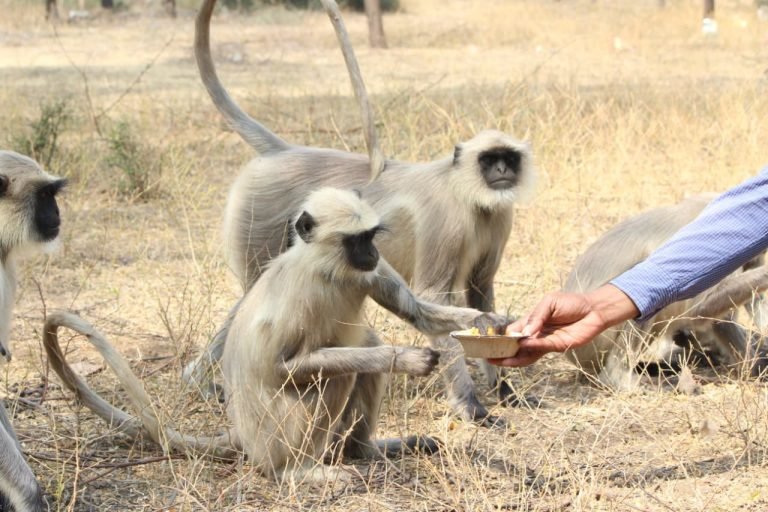
Do not handle a snake, a monkey, or any large or unfamiliar animal. Keep your distance, keep others back, and call the helpline.
Since 2012
The work, in numbers
- Animals, birds and reptiles rescued
- 15,000+
- Rescues from wells, borewells and drains
- 3,000+
- Years on call
- 14
- Children reached with kite-safety guidance, 2025–26
- 1 lakh
Rescue figures cover 2012 to today. The organisation is recognised by the Government of India and the Government of Gujarat, and on Independence Day 2025 was commended by the Principal Chief Conservator of Forests, Gujarat, for outstanding work in wildlife and environment conservation.
How we help
What we do
-

Snake and reptile rescue
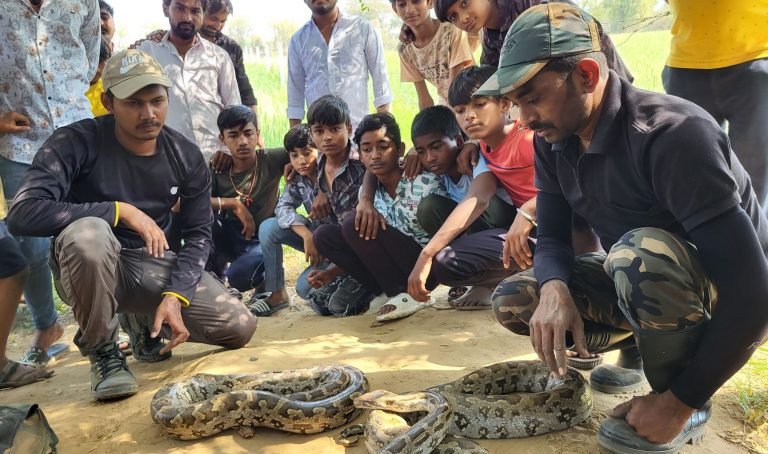
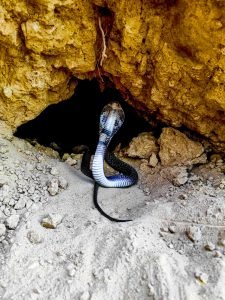
Snakes, monitor lizards and crocodiles removed safely from homes, wells and building sites at any hour, then released into habitat that suits the species.
-
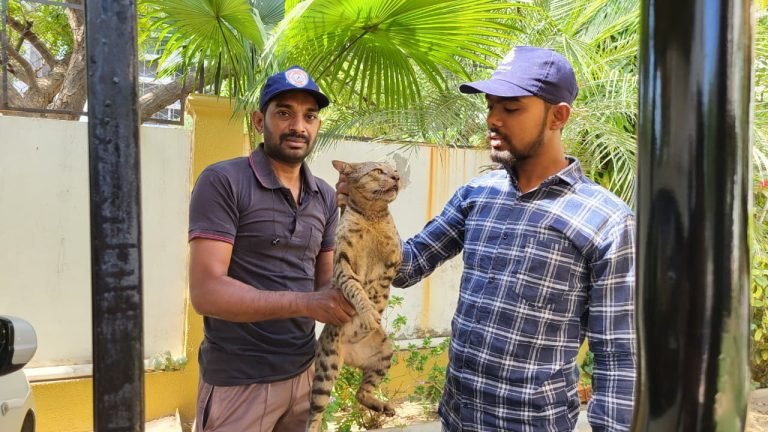
Urban and domestic animals
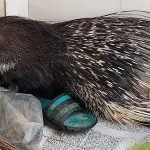
Cows, dogs, cats and pigs, and the wildlife that strays into the city — monkeys, mongooses, nilgai and porcupines.
-
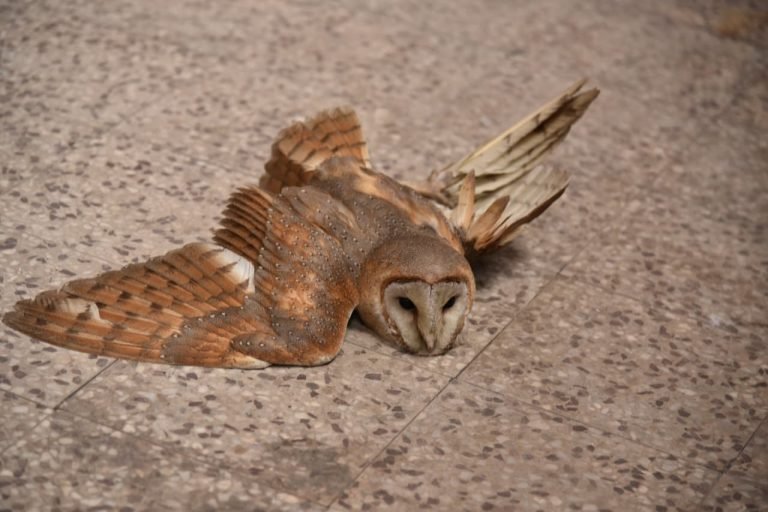
Bird rescue and Karuna Abhiyan
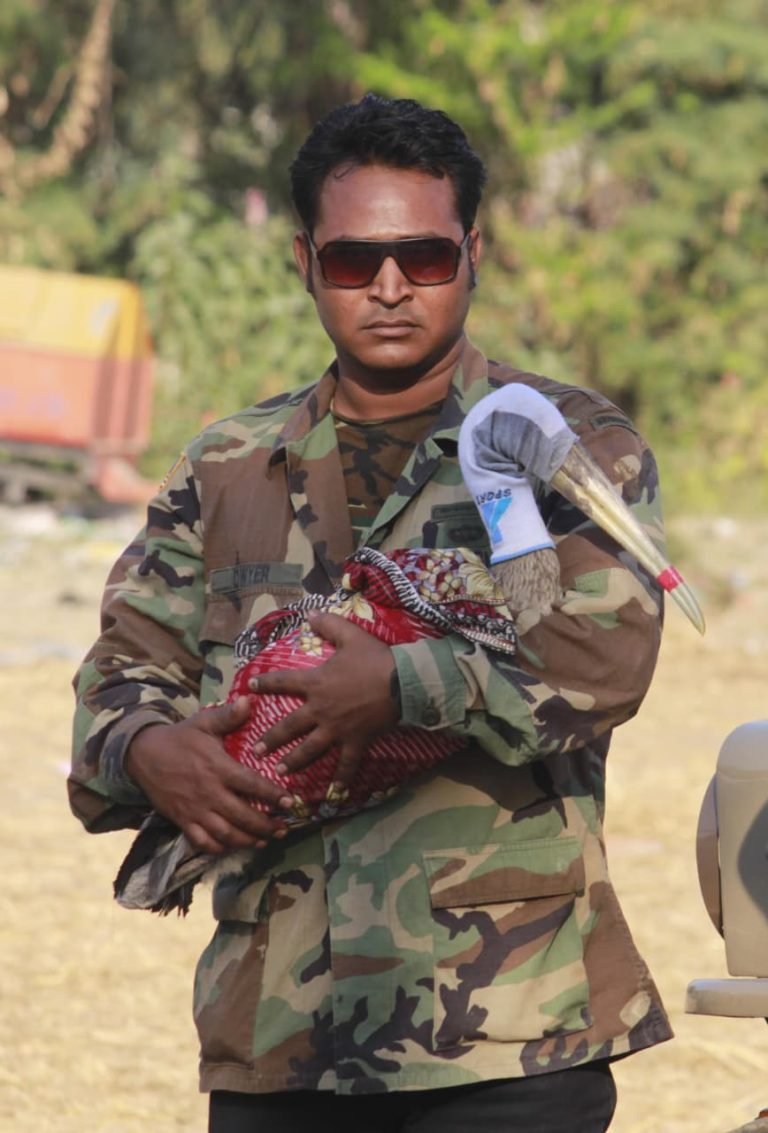
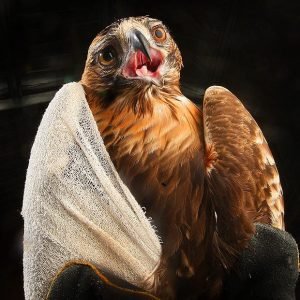
Kite-string injuries, summer heat and fallen fledglings. Camps treating injured birds have run every year for the past ten years.
-

Wells, borewells and drains
Animals trapped in wells, storm-water and sewer lines, fallen into borewells, or caught in nets and mesh. Around 3,000 of these operations so far.
-
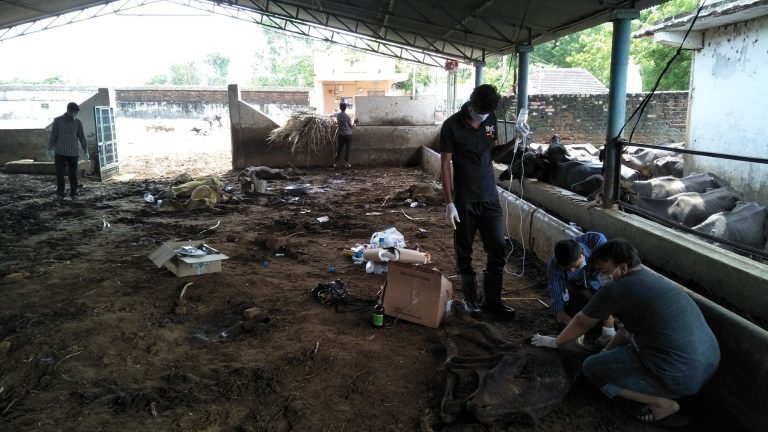
Disaster response
A relief team for floods and other natural and man-made disasters — the Odisha and Banaskantha floods, and the Lumpy Skin Disease outbreak in Gujarat and Rajasthan.
-
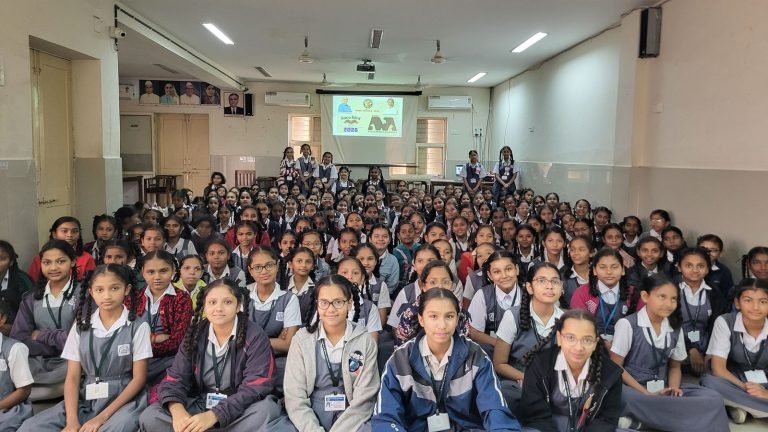
Education and training
Nature education camps, awareness programmes in schools and colleges, and training run together with government and non-government bodies.
-
Environment and biodiversity
Tree plantation and conservation work, and water bowls and nesting boxes distributed for animals and birds through the summer.

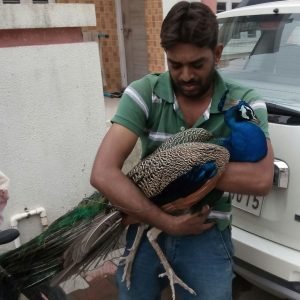

On the ground
What a call-out actually looks like
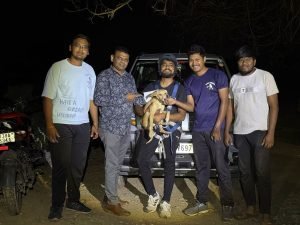
Filmed by our own rescuers, on real call-outs.


Help us help them
Keep the helpline answering
Give once, or every month
Fuel, cages, splints, medicines and the phone bill. A rescue costs money long before it looks like a rescue.
DonateVolunteer with us
Drivers, feeders, fosterers, and people who can hold a torch steady at two in the morning. Training is provided.
Apply to volunteer